The drive from Jerez de la Frontera toward Setenil de las Bodegas starts off completely innocent.
Flat land, vineyards, that comforting feeling that everything is under control. The motorhome hums nicely, the road is friendly, and for a brief, foolish moment you think: Ah, this will be easy.
Well. That thought doesn't last long.
As you move deeper into inland Andalusia, the landscape begins to wrinkle. The road narrows, bends left, then right, then somehow both at the same time. The curves grow more confident, the hills creep closer, and the asphalt becomes increasingly determined to test you. Driving starts to feel like a slow game of chess: you, the motorhome, and the road.
Every bend demands respect, every climb requires patience, and every curve raises the same question:
Did I really want to come here with A HOUSE ON WHEELS?
In these parts, you don't drive a motorhome — you negotiate with the road.
Speed is irrelevant. What matters here are caution, experience, and calm nerves. Lots of calm nerves.
The road winds through rolling hills, past white villages, olive groves, and views you'd love to stop for — if you weren't dragging eight meters of metal behind you. At certain moments, it feels like the road wasn't designed for motorhomes at all, but for donkeys with excellent balance.
And then, just when you start descending toward Setenil, something happens.
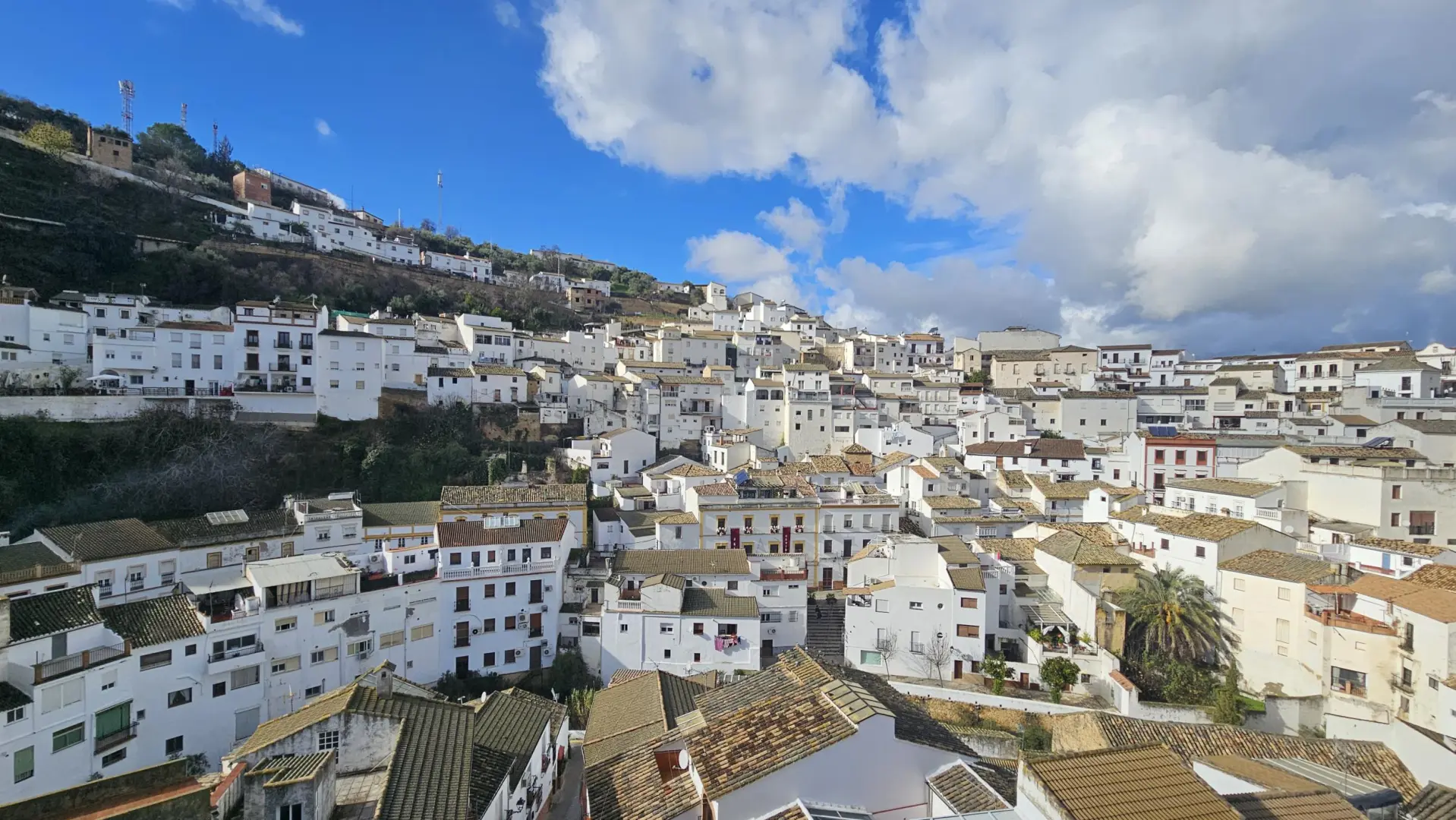
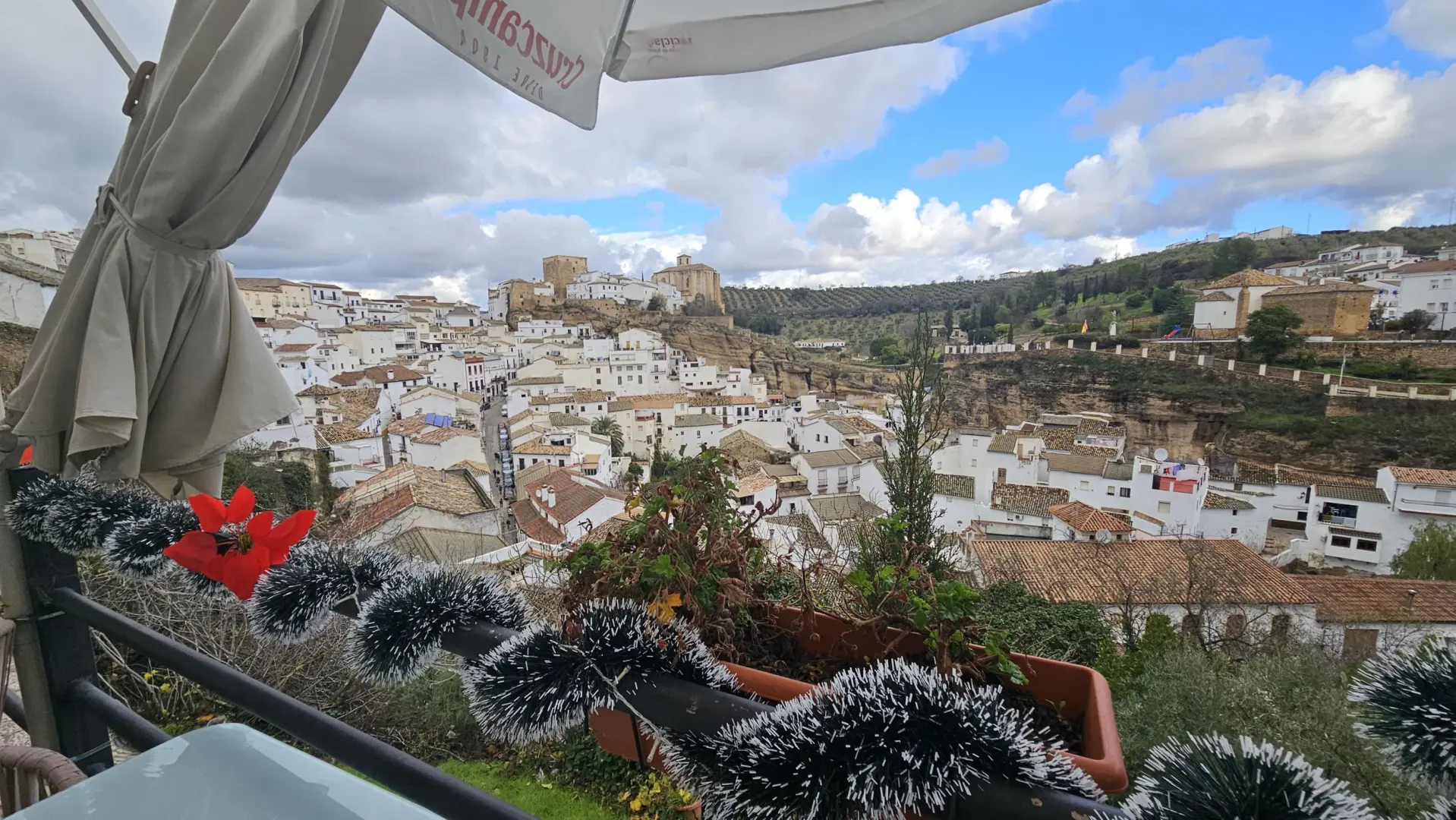
Between the hills, the town suddenly appears.
Not next to the rock.
Not under the rock.
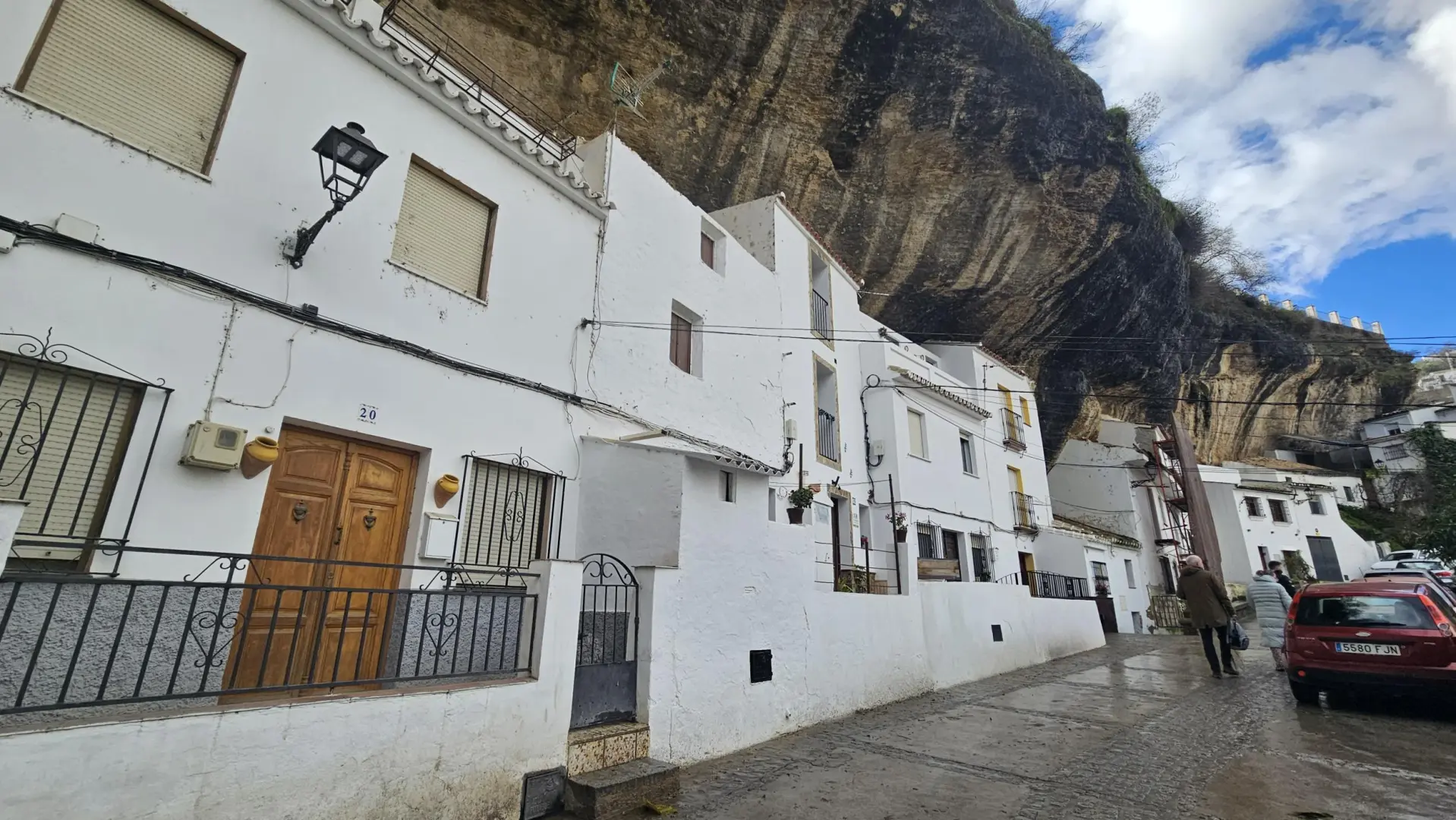
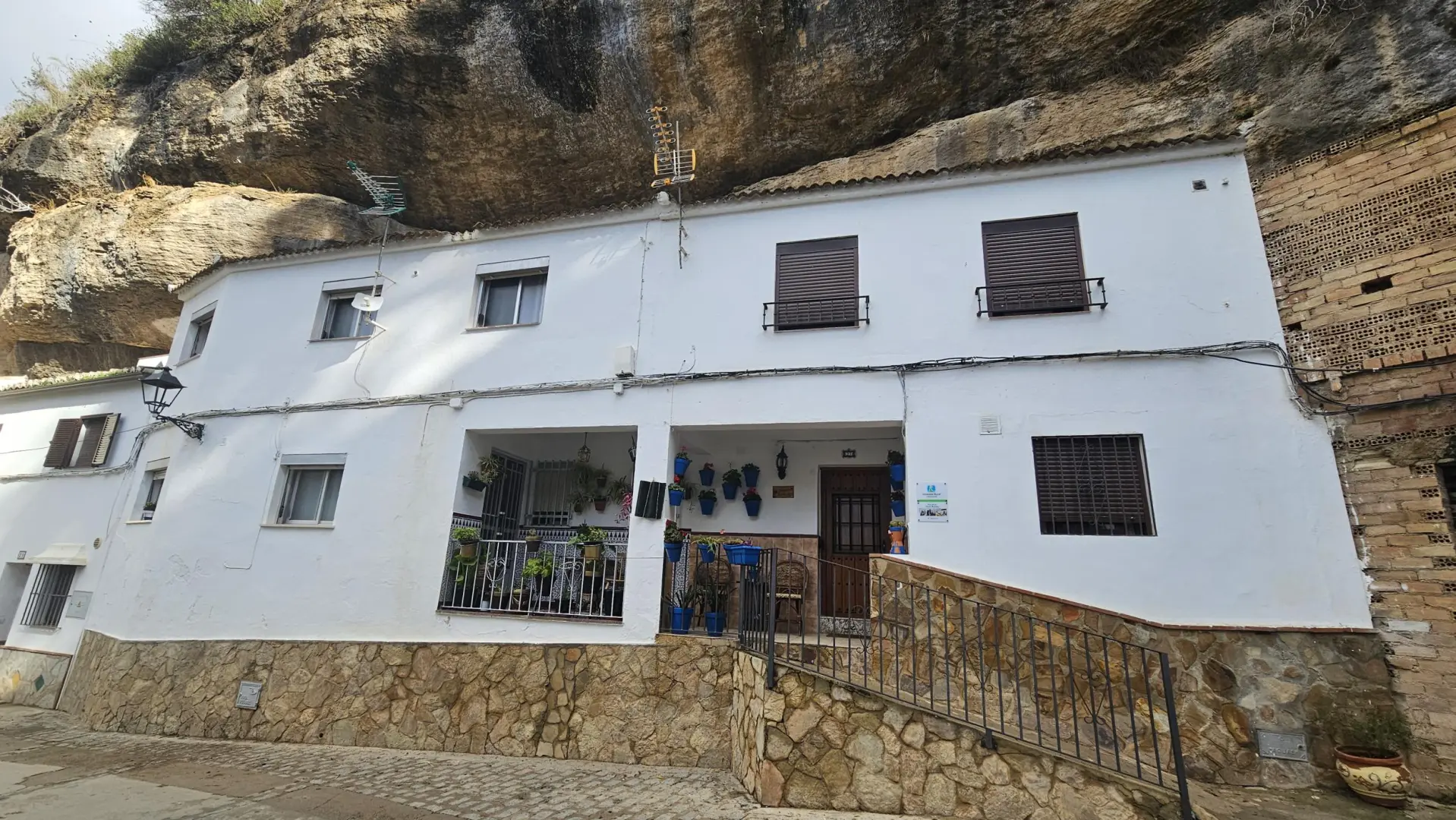
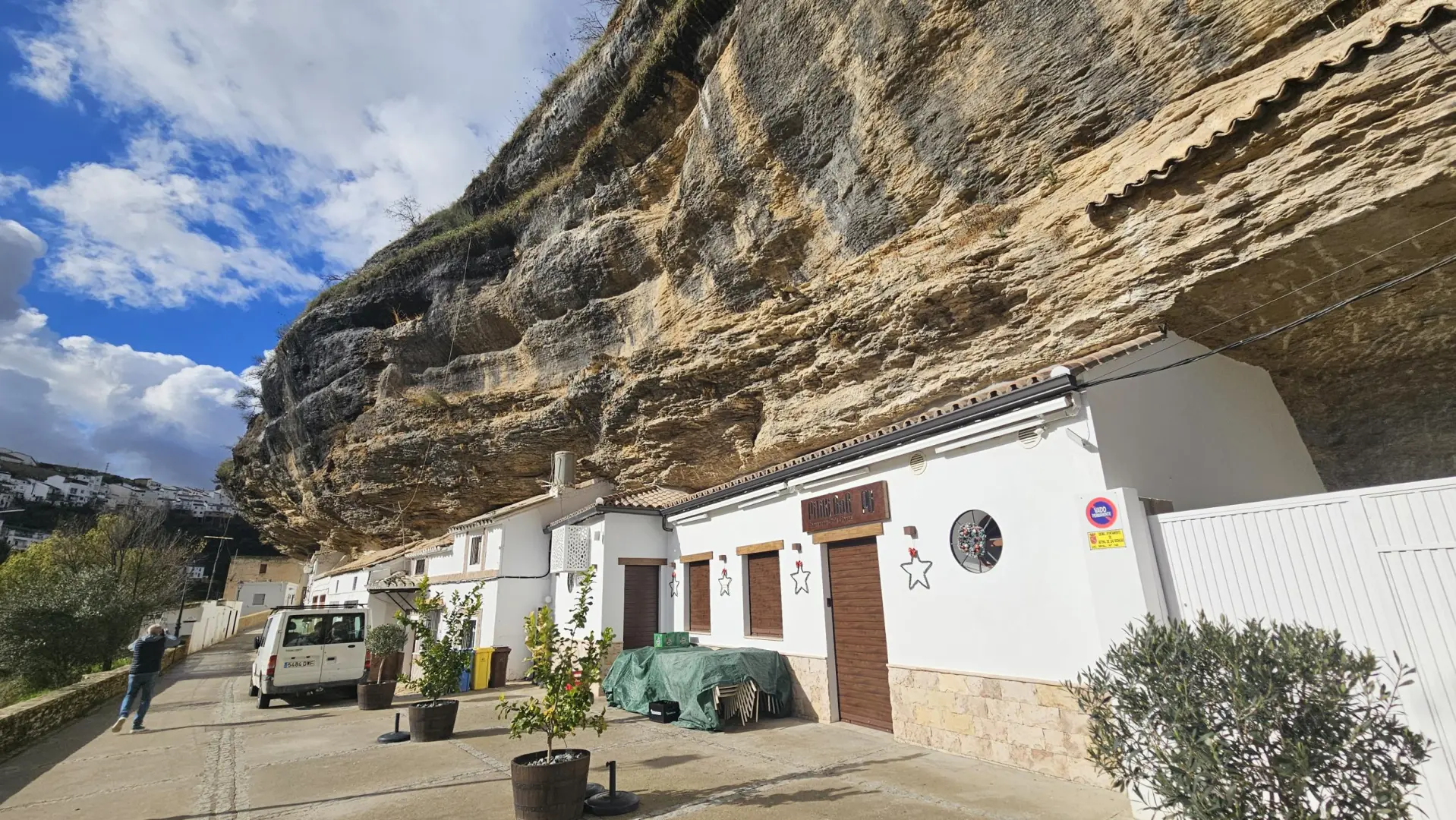
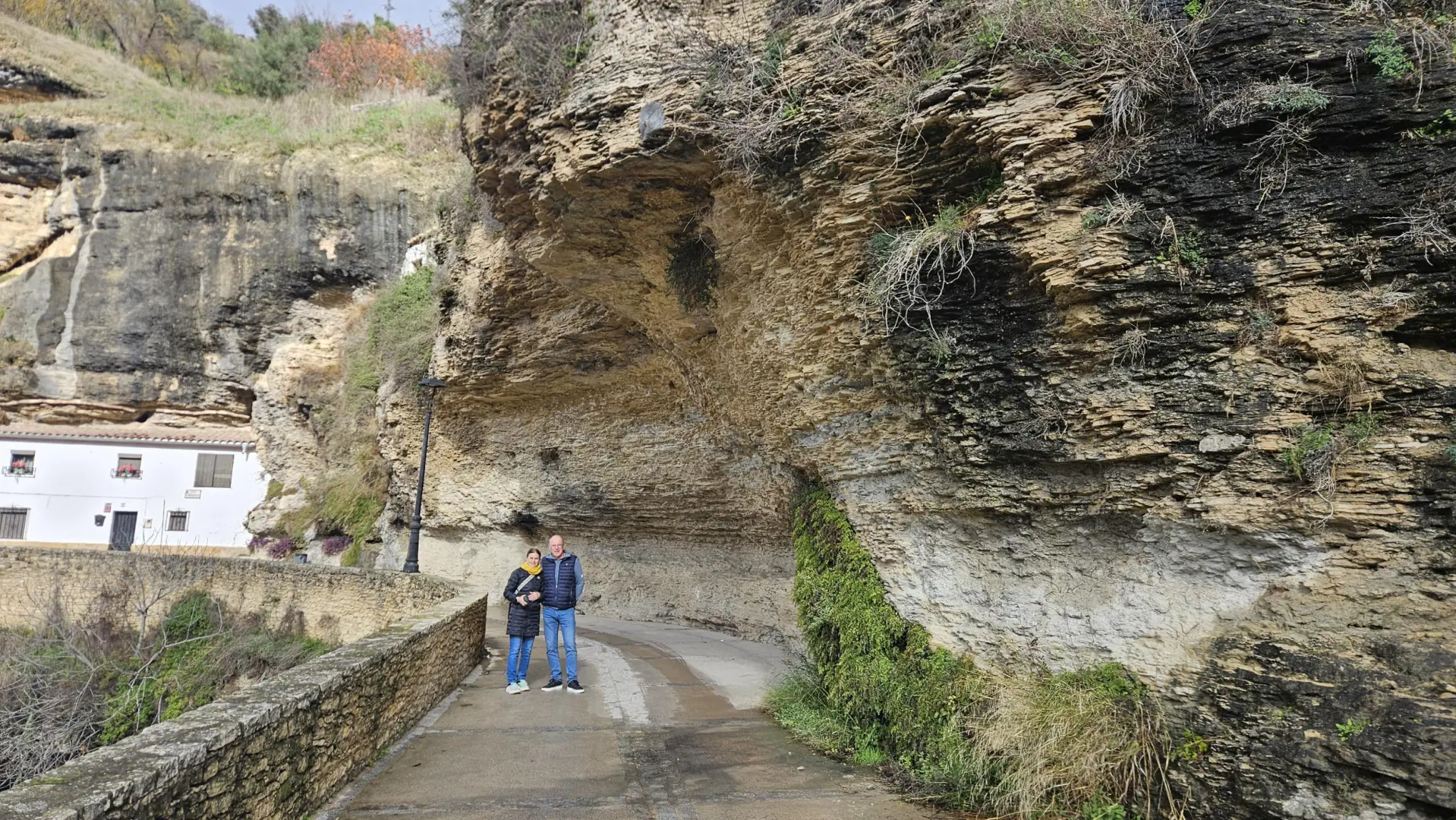
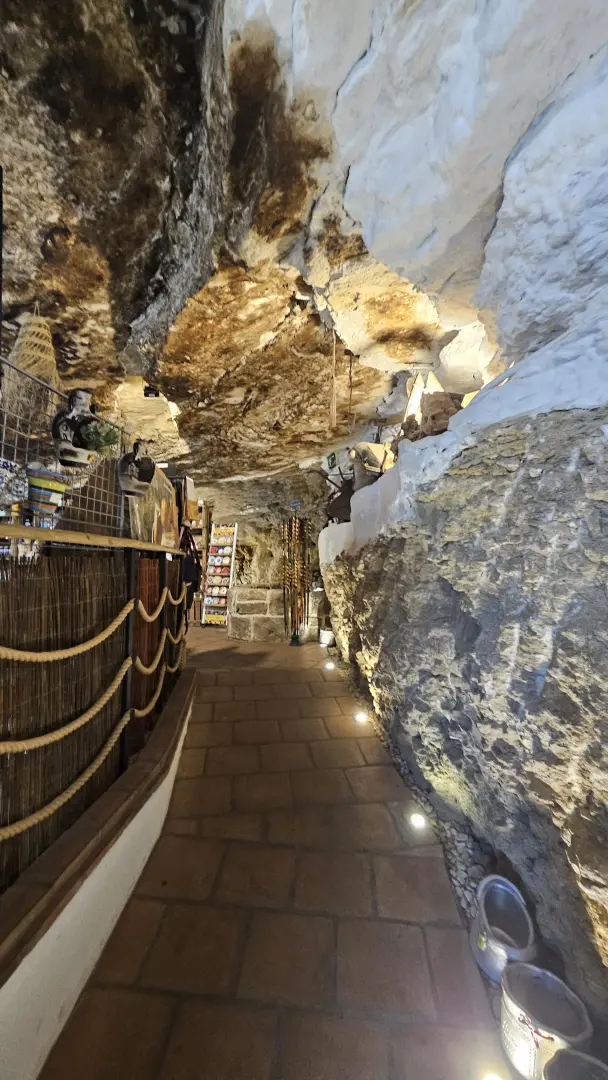
Inside the rock.
Setenil de las Bodegas doesn't reveal itself slowly — it hits you straight in the face. As if someone said: "Here. Now look."
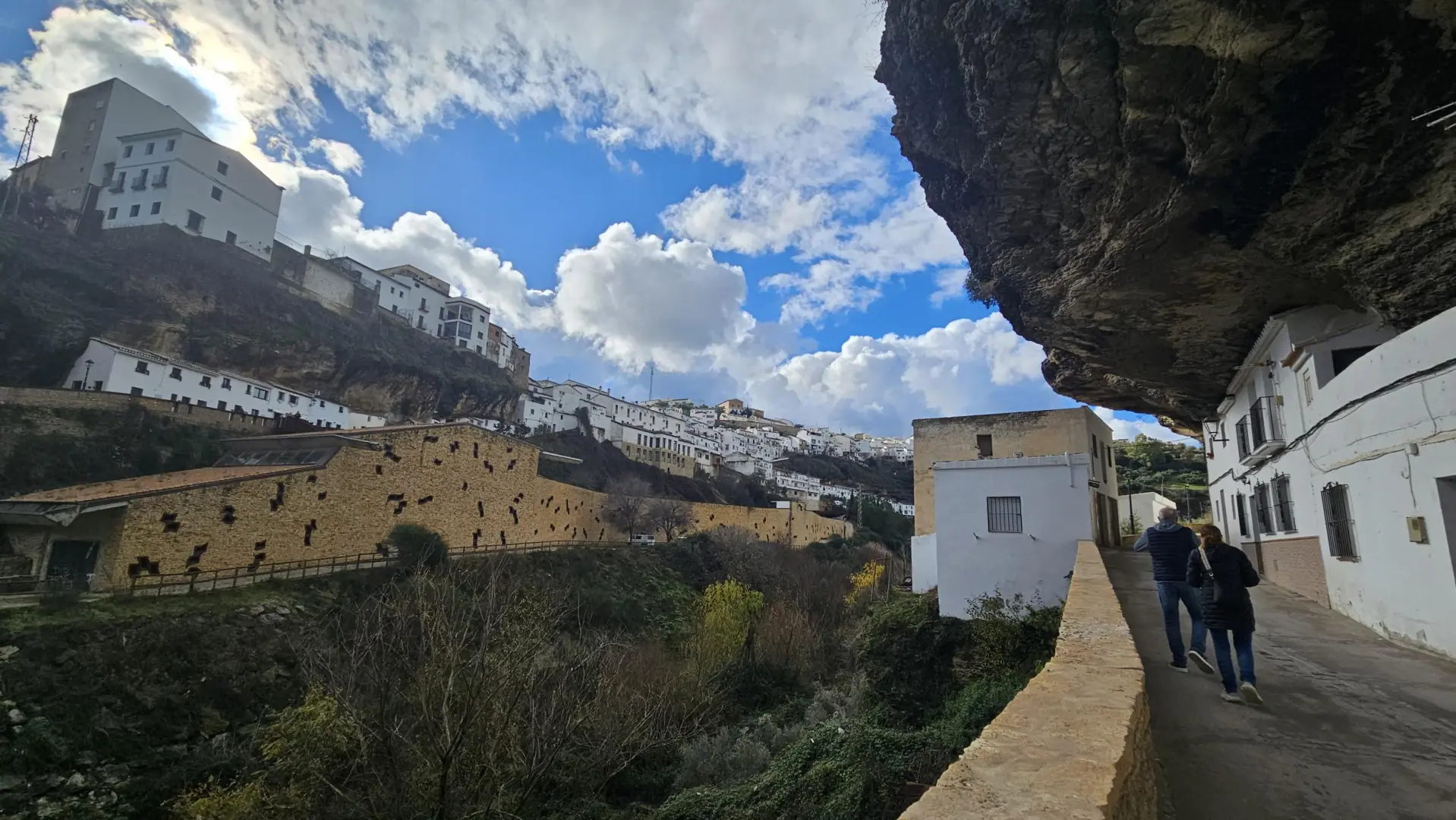
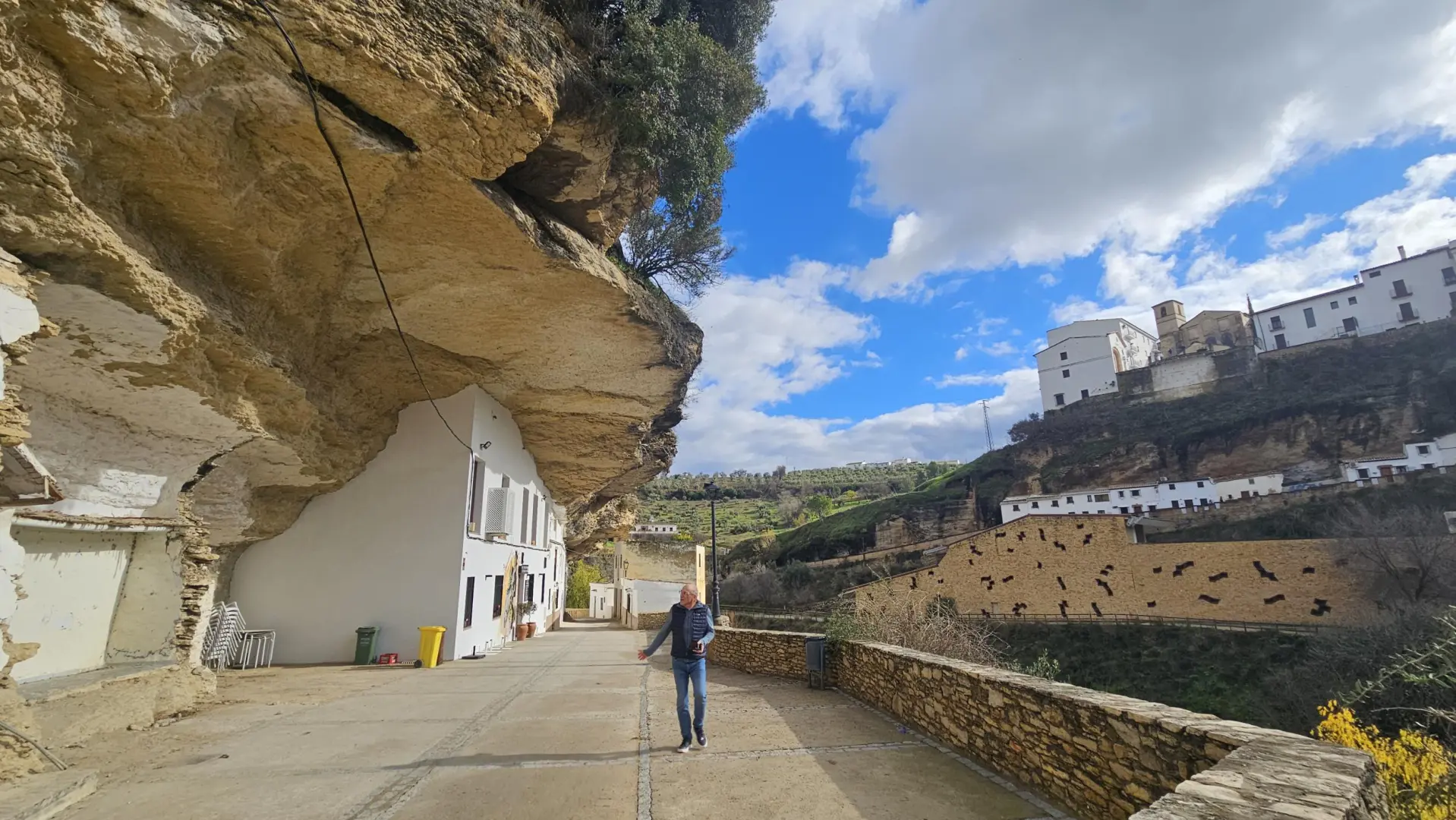
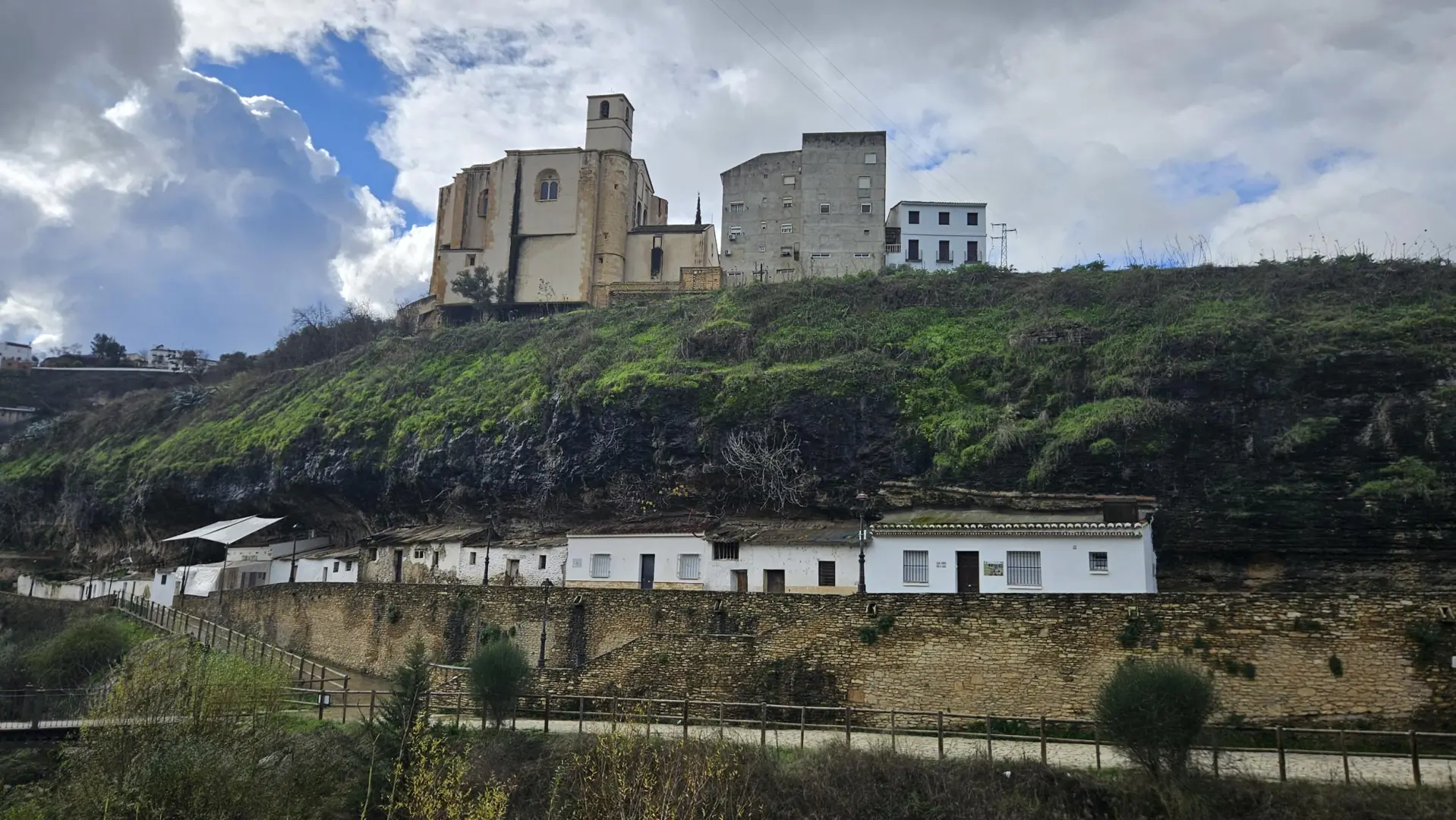
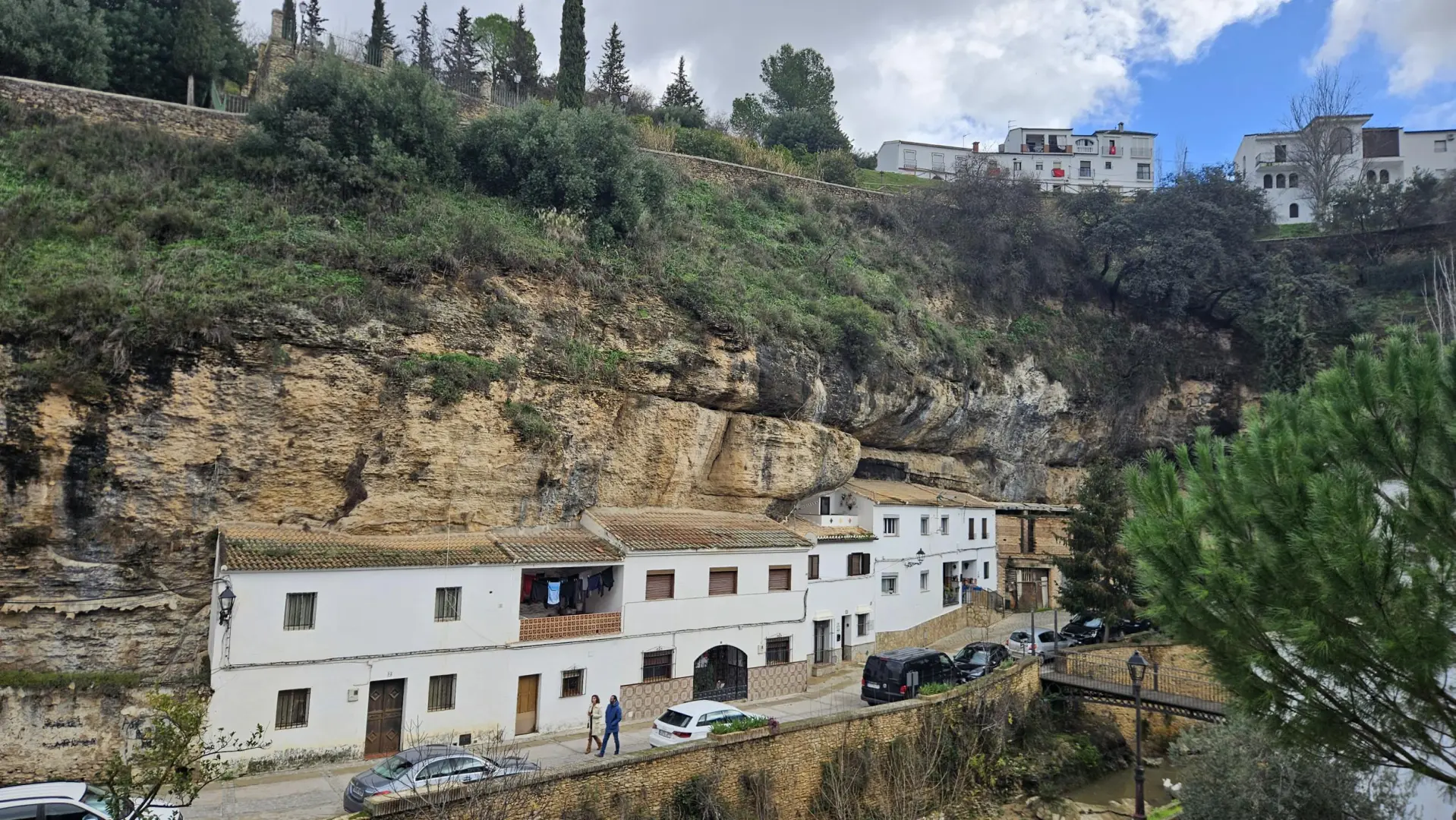
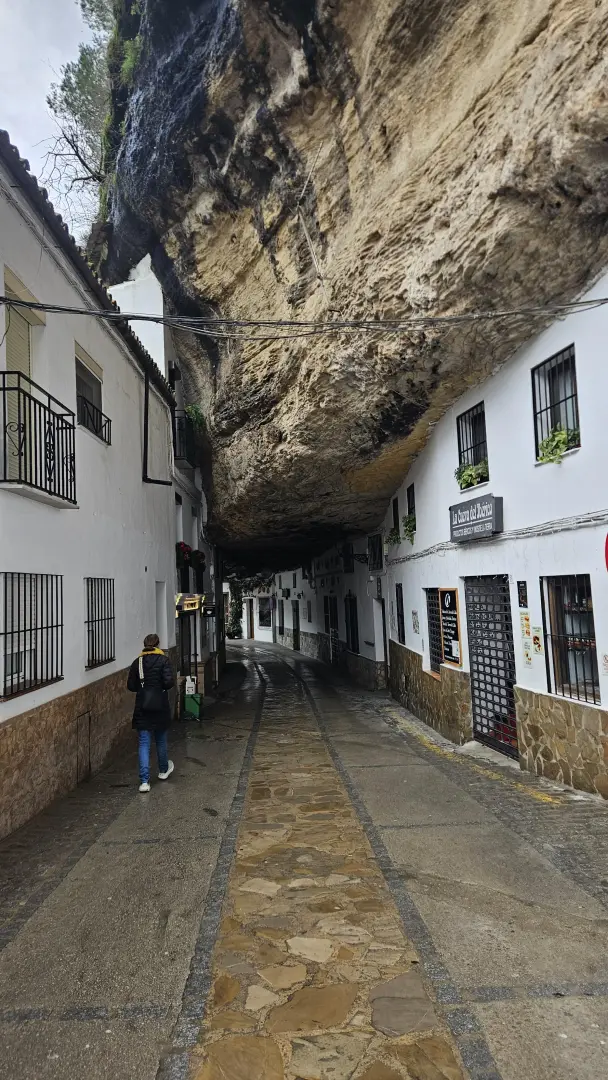
White houses squeezed beneath massive rock overhangs, as if someone drew the village first and then forgot to erase the mountain above it.
At that moment, you forget all the tight turns, clenched hands on the steering wheel, and silent kilometer-counting. Everything suddenly feels worth it. You arrived with the motorhome intact. And that alone is an achievement.
The drive to Setenil isn't just getting from point A to point B.
It's a ritual. A test. A small motorhome Camino.
And when you park and step outside, you don't say: "What a beautiful town."
You say: "We actually made it here."
If you think arriving in Setenil de las Bodegas by motorhome is an adrenaline experience, wait until you start looking for parking.
That's when the real game begins.
The navigation confidently claims it knows where it's going.
The streets strongly disagree.
Every street looks narrower than the last, every turn whispers:
"This is not for motorhomes.
This is not for people with weak nerves.
This is not a good idea."
The motorhome suddenly feels bigger. Not slightly bigger.
Enormous. Like a ship that accidentally sailed into a mountain village.
Hands tighten on the steering wheel. Breathing becomes shallow.
The locals' looks, however, are classic Andalusian: calm, curious, slightly amused. As if they're watching another episode of a daily show:
"Ah yes, another tourist with a motorhome. Let's see if they turn around."
Meanwhile, your mind spirals through thoughts like: – life choices,
– why you didn't buy a smaller van,
– why you apparently enjoy challenges,
– and how you'll explain reversing 200 meters if necessary.
The parking area appears at the very last moment.
Not with a sign saying WELCOME,
but with a feeling: "If it works, it works. If not — well."
When you finally park, something magical happens:
your nerves don't come back immediately.
First, you sit.
Then, silence.
Then, a laugh — that nervous laugh that means: We survived.
Getting out of the motorhome is a ritual of its own.
You look at the vehicle, then at the rock above you, and think:
That house has a mountain for a roof.
I still have shaking hands.
But you know what? It was worth it.
Because Setenil isn't a place you conquer easily.
It breaks you a little — then rewards you with victory.
Your nerves?
They stay somewhere between the last bend and the first street.
And you don't miss them.
Because in Setenil you realize one thing:
If you managed to get a motorhome here, life can't scare you much anymore.
SETENIL DE LAS BODEGAS – WHEN HOUSES DECIDE TO LIVE UNDER A ROCK
Setenil de las Bodegas is not a village.
Setenil is an architectural decision that would last about three minutes in a modern building inspection meeting.
The inspector would say: "This won't work."
Setenil would reply: "Hold my beer."
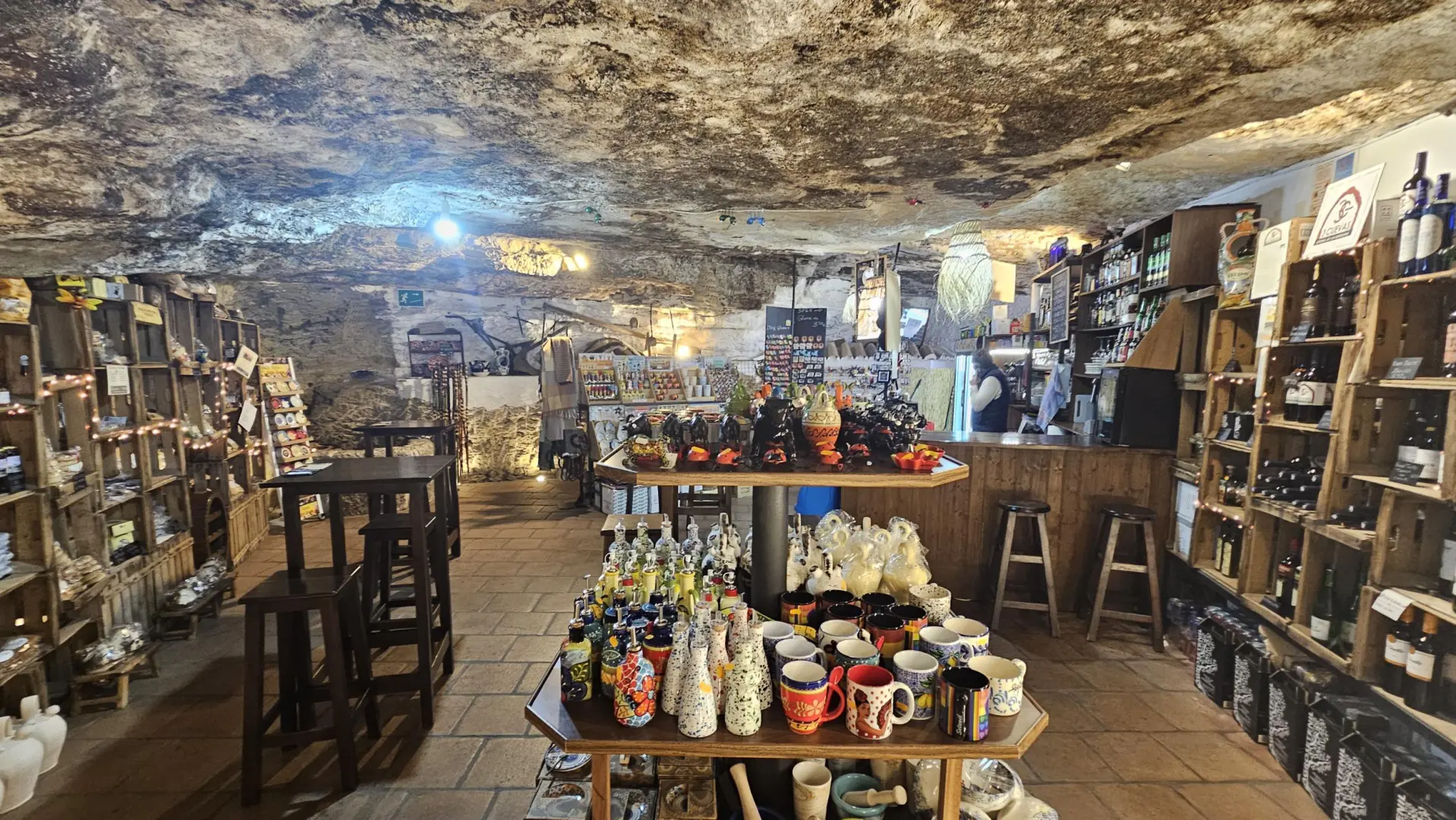
It's a small white town in Andalusia that didn't adapt to nature — it adopted nature as its roof. Literally. The houses here aren't built under the rock, but into the rock. The rock is ceiling, wall, protection, and air conditioning all in one.
The name de las Bodegas has nothing to do with wine (disappointing, I know), but with former storage rooms and workshops. Setenil's history goes back over 3,000 years — Romans, Moors, the Reconquista, all the classic Spanish episodes passed through here.
But the real star of the story isn't people.
It's the rock.
The Moors realized that living under a massive stone overhang was extremely practical: – cool in summer,
– warm in winter,
– sieges? less stressful,
– air conditioning? natural and electricity-free.
When Christian forces finally conquered the town after 15 sieges (yes, fifteen), people stayed. Because once you've lived inside a rock, moving to a normal house just feels wrong.
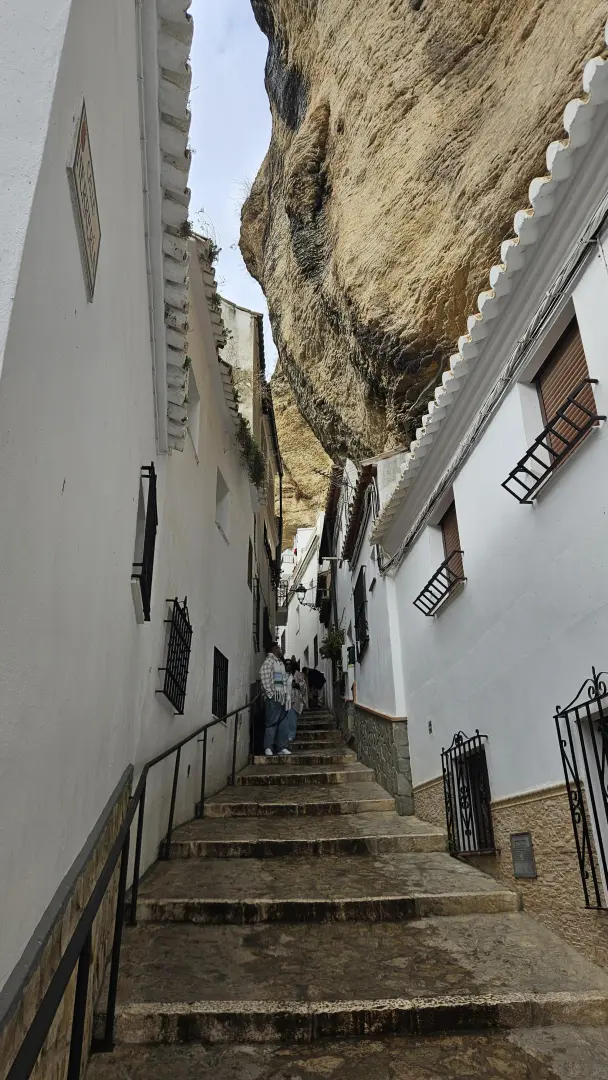
The most famous streets are Calle Cuevas del Sol and Calle Cuevas de la Sombra.
Cuevas del Sol is sunny, lively, full of bars and tourists with open mouths. The rock hangs above you like a massive stone cloud while you drink coffee and pretend you're not thinking about structural integrity.
Cuevas de la Sombra, on the other hand, is darker, quieter, cooler — perfect for summer, or for people who enjoy the feeling of being watched by a city from above.
Walking through Setenil feels like strolling through a movie set, constantly wondering:
"Is this even allowed?"
The answer is: apparently, for centuries.
FOOD UNDER THE ROCK
No overthinking here.
Setenil serves classic Andalusian food: – jamón ibérico,
– cheese,
– olives,
– stews,
– local wine.
Eating under a rock has a special charm. Food tastes better when you know that something millions of years old is hanging above your head — and still hasn't decided to fall.
The restaurants are small, cozy, no fine dining, no pretending. If the plate isn't big, the bread will make up for it. Always.
Setenil is not a place for rushing.
It's a place for: – slow walking,
– looking up,
– occasionally bumping into walls because you're staring at the rock instead of the path.
It's a place that reminds you how small you are compared to nature — and how inventive humans can be when nature sets the rules.
Setenil de las Bodegas isn't just a beautiful town.
It's proof that you can cooperate with nature instead of fighting it.
And above all, it's a reminder that
if you have a big enough rock over your head,
you don't really need a roof at all.