The lights came on in the albergue at 6:00. In the morning, people here are like zombies, stumbling around, searching for themselves and creating chaos. I tried to sleep until 7:00 to avoid the crowd, but it was impossible to go past 6:30 because everyone was just too damn loud.
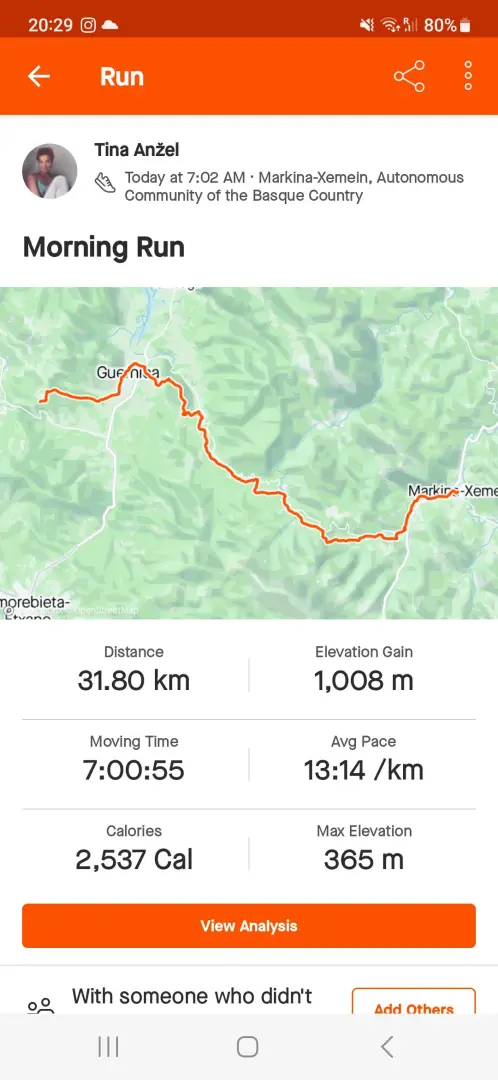
Yesterday, during our drinks, we booked a hostel slightly past the town of Guernica, a bit over 30 km away. This stage includes 1000 meters of elevation gain. A cyclist cries once a day here, but a hiker cries twice — once going up and once coming down. And when you’re going down, it’s steep as hell. Walking in zig-zag is safer and less painful for the knees.
Today was all hills and insane heat. I reached the destination sticky like a lollipop but definitely not sweet. I started the hike last because I wanted to test whether I’m slow or fast. Well, I arrived first among “our” group — nearly two hours ahead. I took just two short breaks. I was in a great mood walking-wise and could’ve done another 15 km after a shower. But all day long I was pissed off because of the bedbugs. Tomorrow, once I arrive in Bilbao, I have to wash my entire backpack at 60°C. »Brko«[1] from Berlin suggested throwing everything into the dryer too. “Better safe than sorry,” he said. Gotta love the guy. 😂
So far, I’ve got no blisters. My legs are getting into shape — I’m not whining nearly as much on climbs. My left leg is still slightly swollen. I ate one melted Kit Kat all day, because it was just too damn hot for real food. I drank around 5 litres of water. The fact I only peed once says it all — it was like walking through a damn oven.
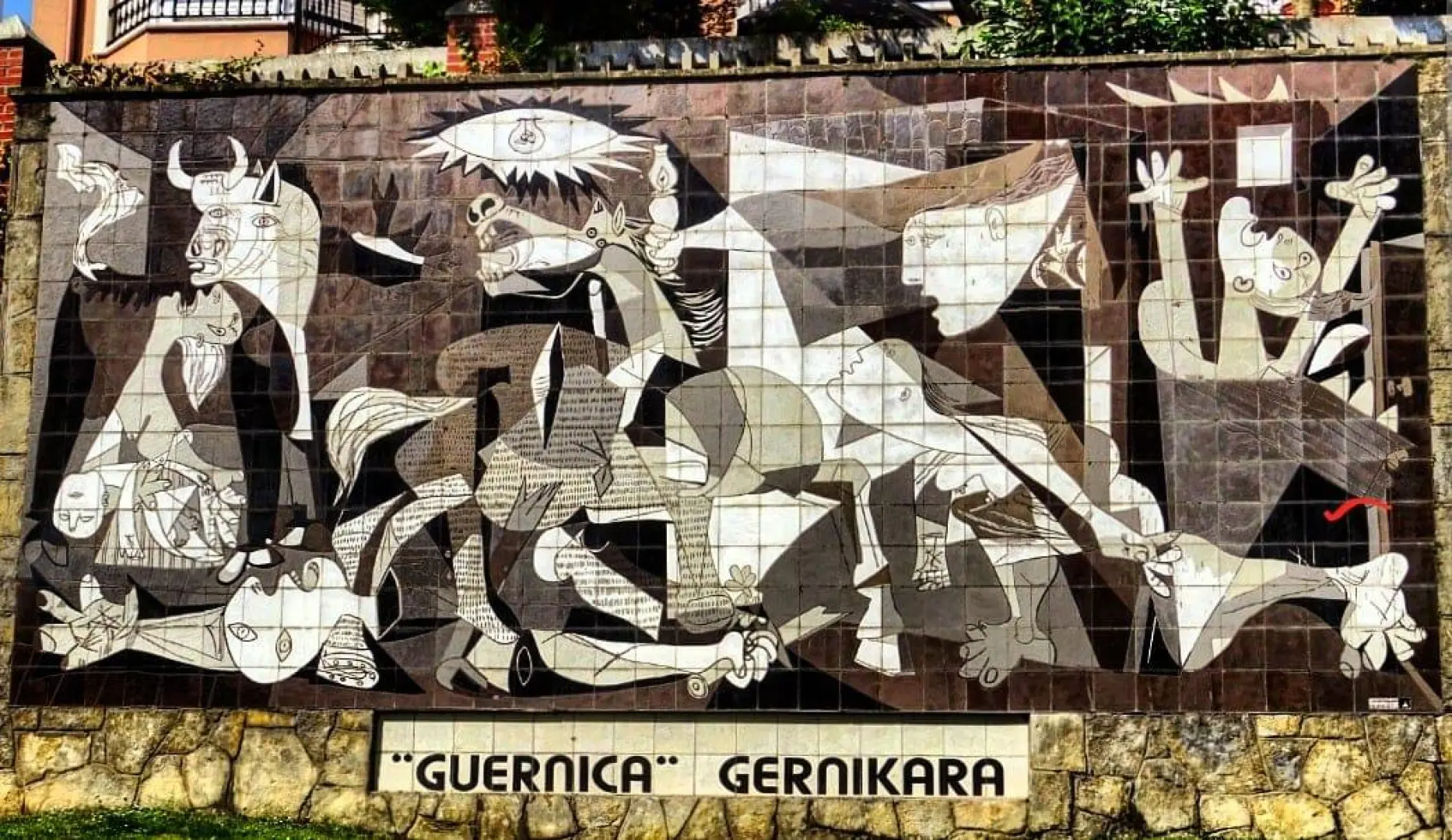
Guernica is also the name of a painting by Spanish artist Pablo Picasso. It’s considered one of his greatest works and among the most iconic paintings in the world. Created in Paris between May 1 and June 4, 1937, it’s an oil on canvas in cubist style. Picasso painted it in response to a commission from the republican government of Francisco Largo Caballero for the Spanish Pavilion at the 1937 World’s Fair in Paris. The massive canvas is a powerful condemnation of the bombing of Guernica on April 26, 1937, during the Spanish Civil War — ordered by the Spanish nationalists and carried out by Nazi German and Italian fascist units. The painting, exhibited worldwide from 1937 to 1939, played a crucial role in propaganda efforts around the bombing and the war. It quickly gained recognition and international political weight, becoming a symbol of condemnation of Francoist and fascist violence and the horrors of war in general. The history of this town is terrifying, especially because women and children were slaughtered. There is even a movie named after the town.[1] Brko – referring to Hitler