Seville: the aunt at a village fiesta and me on the verge of a breakdown
Seville is like that energetic aunt at the village fiesta: decked out in lace, every gesture overacted, emotions splattered everywhere, and so loud your thoughts would rather shove cotton in their ears and call in sick. Peace? That’s a long-forgotten concept here, probably archived somewhere between the Moorish tiles and the tapas.
Every kiosk, every balcony, every street musician seems to have one goal only: outshout the rest. Even Jesus would probably say, “Silence, please.” And if you think the streets will offer a second of peace—forget it. In a single moment, you can get whizzed past by a cyclist, a scooter rider, a motorcyclist, someone on rollerblades, and an angry Fiat driver honking like his patience just died.
That final day in this acoustic amusement park had worn me down. Honestly—I came on holiday to find peace. Silence. That kind of stillness where you can hear your own breathing rhythm, not reggaeton blaring from four bars at once. Neither my boyfriend nor I are city lovers. We’re village folk. The kind of people who know when the mailman comes and where the neighbour has the best salami. So we spent our last hours in Seville in the hotel garden—where at least the flowers don’t play the accordion.
We reminisced about past travels and quietly (well, almost quietly) planned new ones. We’re in a long-distance relationship—4,896 kilometres apart, to be precise—and every moment together is like a gold medal in the emotional logistics Olympics
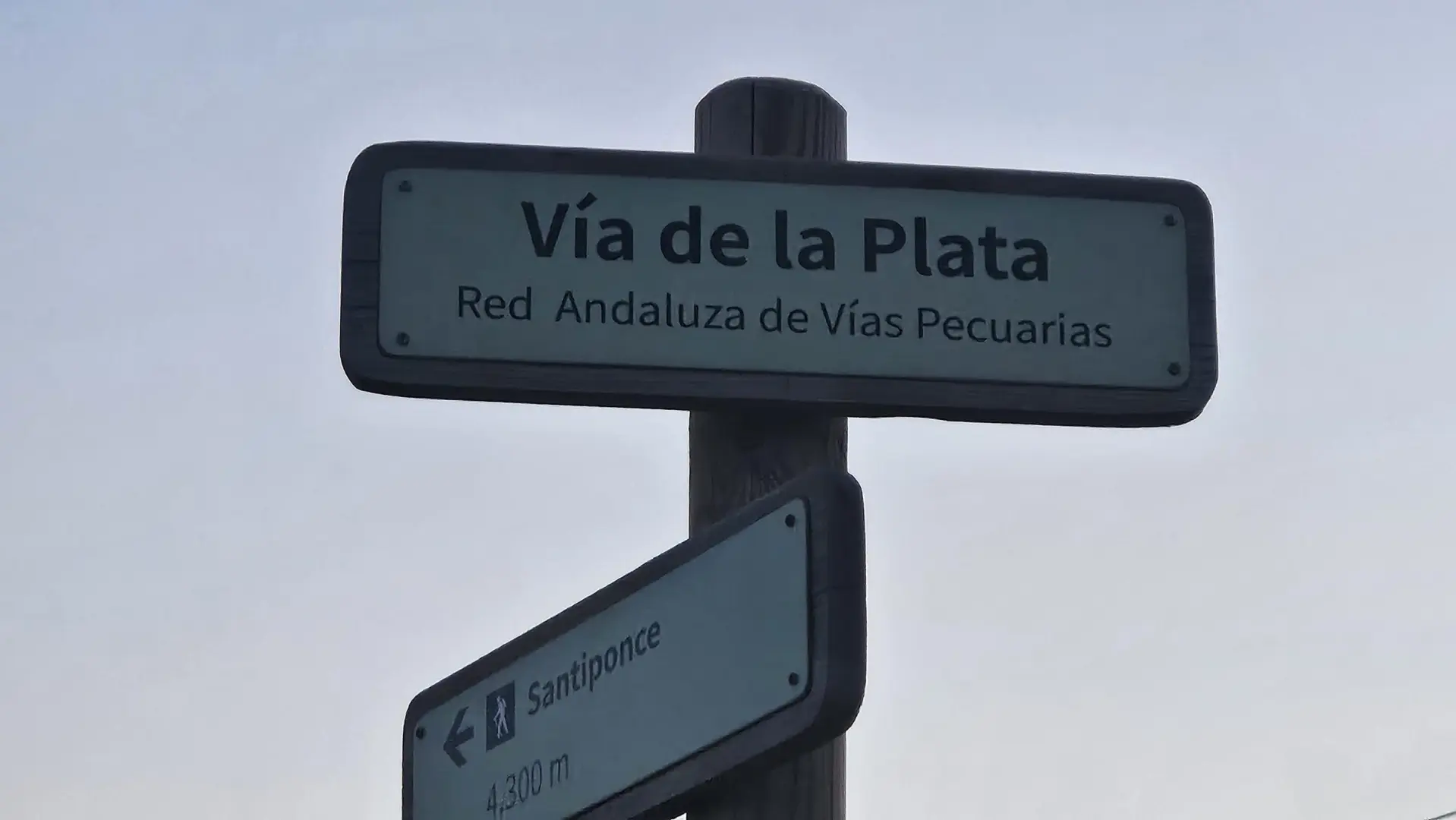
Because this man reads me like an open book, he noticed I was on edge. Not because of him. Because of me. And because of the upcoming hike. Camino de la Plata starts tomorrow. Walking is supposed to be a form of moving meditation, but for me, it’s more like the Stations of the Cross with a hiking backpack. If my foot already swells while looking for a decent coffee, you can imagine what’s coming tomorrow.
To take my mind off things, he dragged me to a flea market—where I could ponder life’s big questions, such as: Do I need another dusty candlestick? (no), Will a two-euro metal button change my life? (probably not), and Should I buy a statue of the Virgin Mary with a missing arm? (almost yes).
Then it was back to the hotel garden. Our final evening together. Me—fully focused on the suffering that awaited. My backpack stood in the corner, staring at me like a cat who knows it’s getting stuffed in a car tomorrow.
Tomorrow I leave. For the Camino. A long journey north and, supposedly, towards myself. I just hope I don’t meet myself within the first three kilometres and say, “You go ahead, I’m going home.”
When you’re having a good time, hours run faster than a student escaping an exam—and just like that, Friday morning arrived. A proper night’s sleep? Not really. More like dozing off between air raid sirens. Sometime during the night I managed to eat one of the two sandwiches I had heroically prepared the day before: smoked salmon and cream cheese—a winning combo if you like sandwiches that have been sat on by your own luggage. Washed it down with a fruit yogurt. A real culinary extravaganza, if you ignore the fact I ate it in the dark, sitting on the edge of the bed with half-shut eyes.
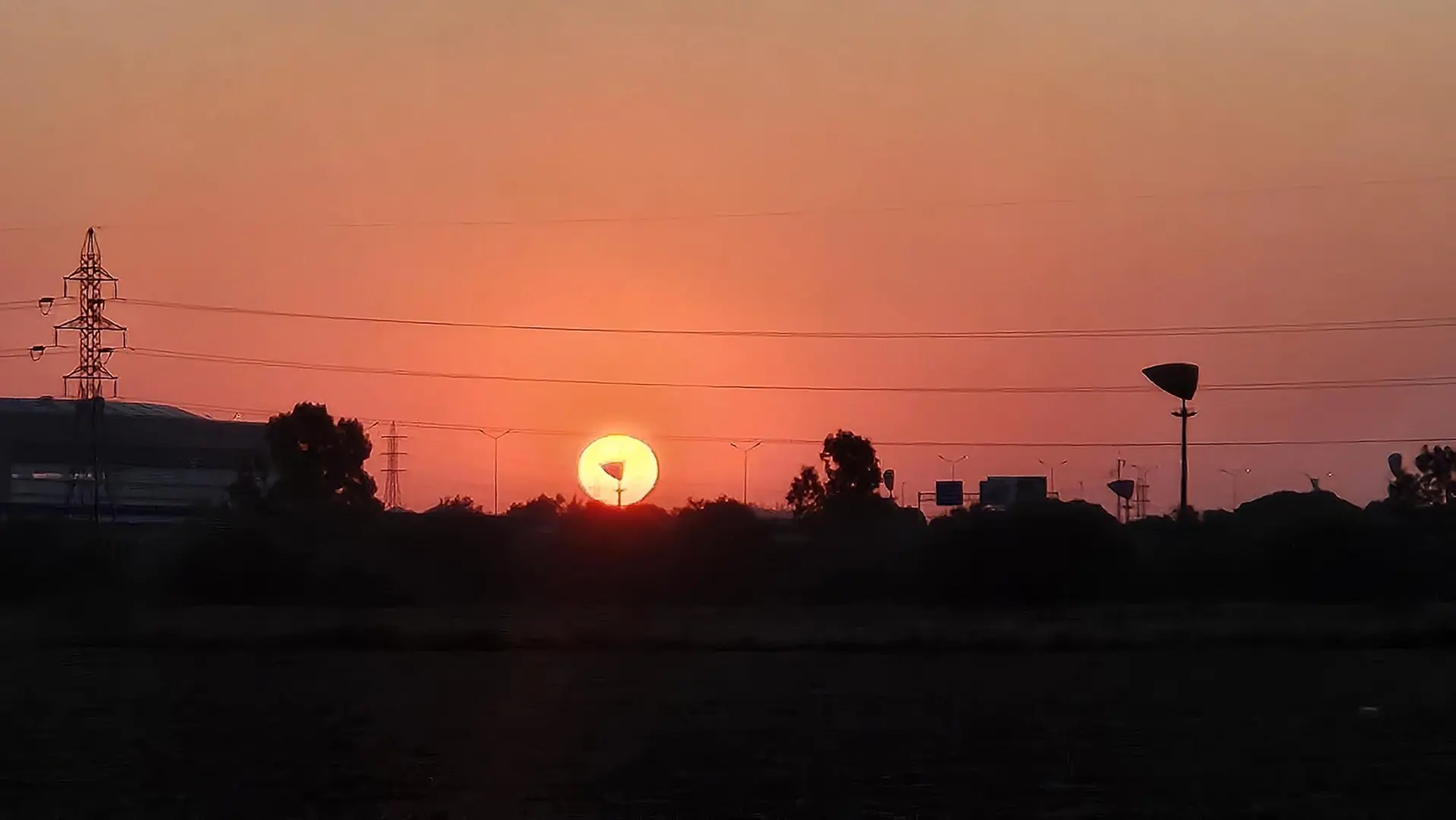
Thank God I managed to get that much down, because otherwise my shoulder joints would’ve staged a full-blown protest today, like a union before elections. A nine-kilo backpack is no featherweight, especially not when you decide to take a “stroll through hell.” And of course, why not start the day at 6:15 a.m.—a time that already feels like midday heat in these parts.
On the first stage, I was accompanied by an old acquaintance named Pain—specifically in my right foot, around the ball area. This lady usually only shows up when I’m barefoot or in flip-flops, but today she decided to join me in sneakers. Clearly, she wanted the full experience. She was manageable—in the sense that I didn’t sob out loud—but still, not exactly the kind of travel companion you hope for at the start of a journey.
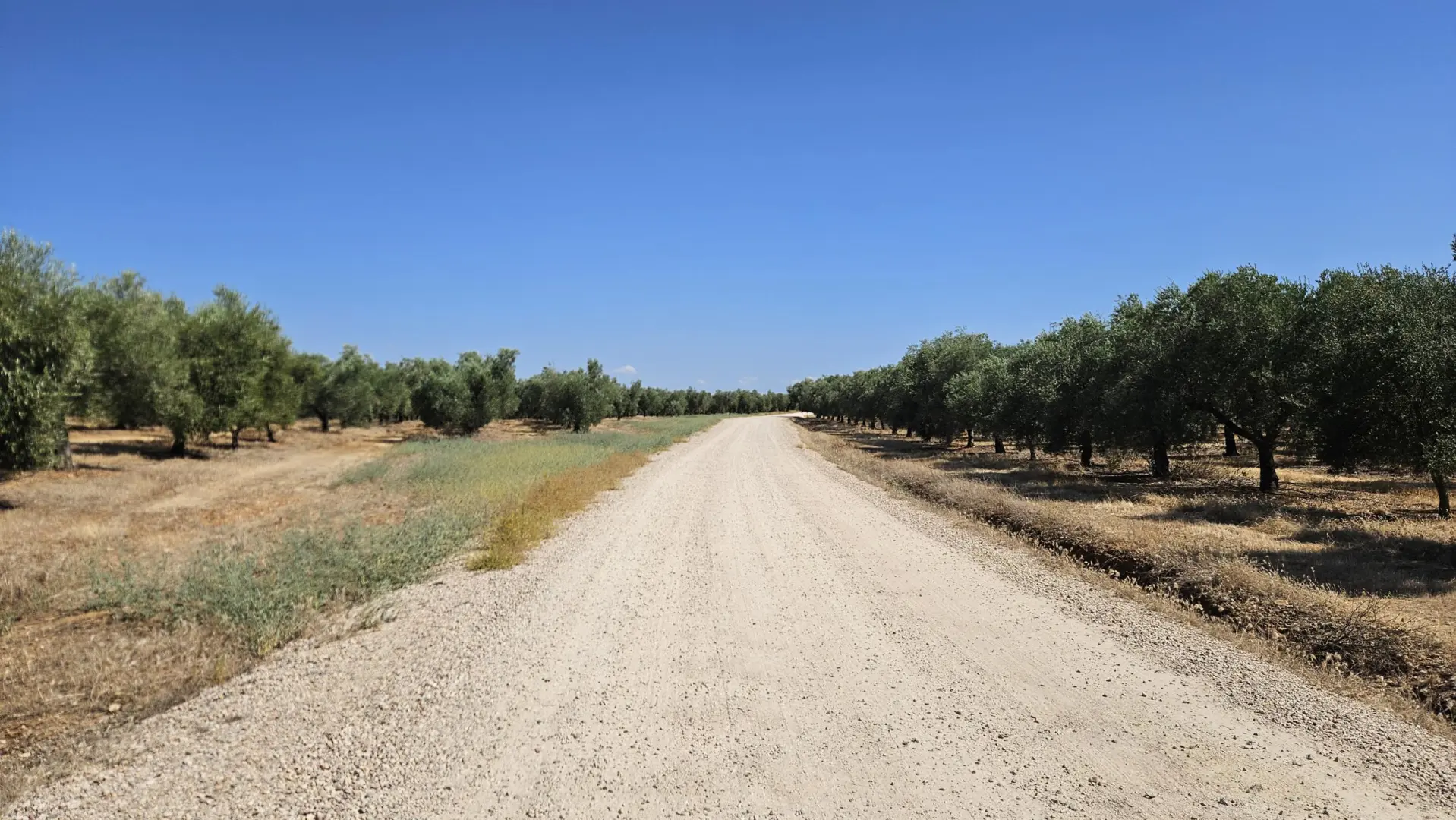
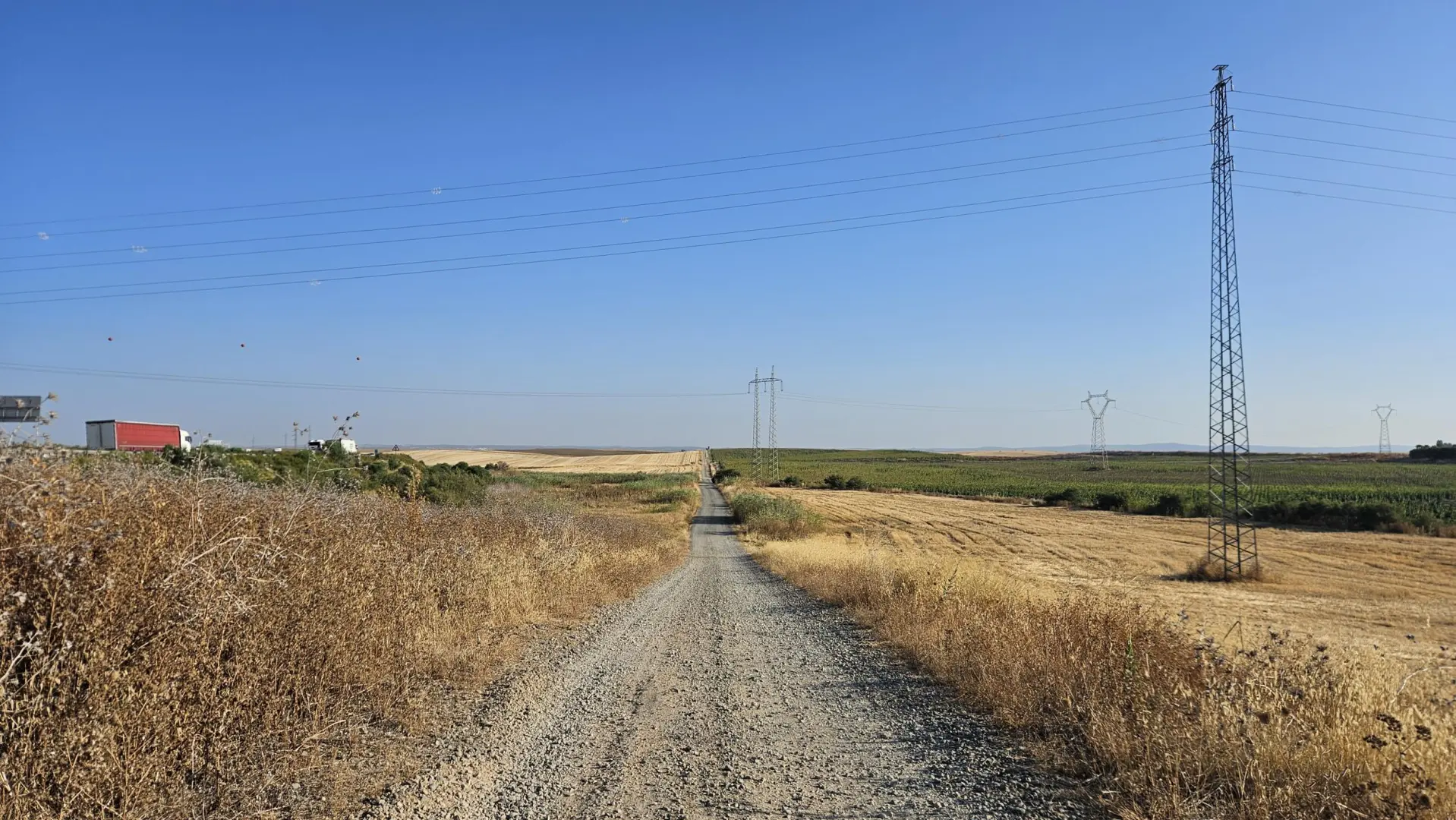
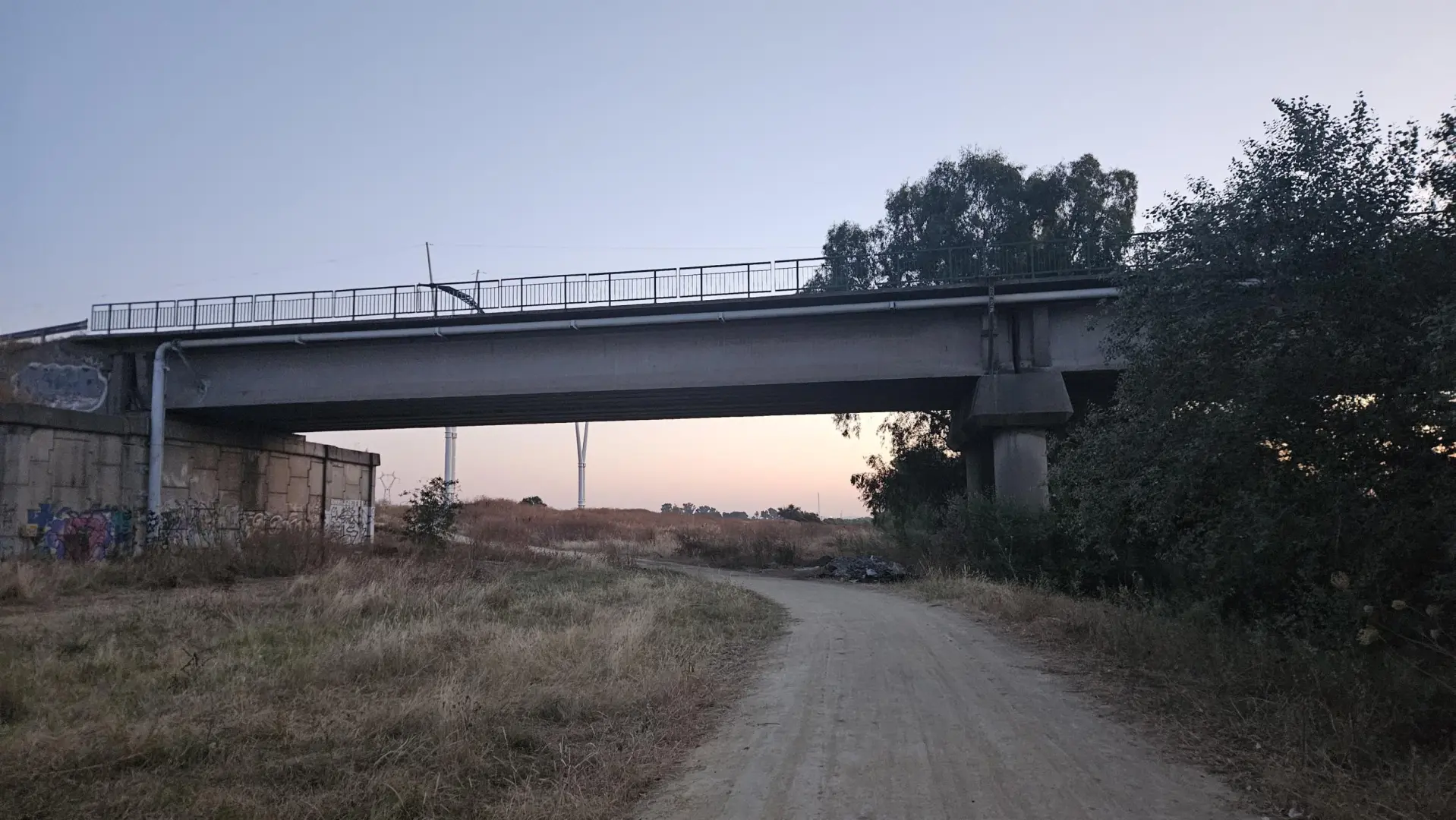
I’m hoping it’s just the weight of the backpack and that my feet will soon realise we’re not dying, we’re just “living outside our comfort zone,” as the modern saying goes. By the second stage, I couldn’t feel the pain anymore—probably because the sun had started slowly cooking my brain. Compared to this, Seville was basically a walk-in fridge. I walked through endless rows of olive and orange trees, which offer about as much shade as an open oven.
The last 18 kilometres were pure hell. My phone overheated, and the water in my bottles reached a temperature that could easily pass for instant soup. The sun doesn’t bring you to your knees here—it slaps you straight onto your face. Over the final 10 kilometres, I stopped every 300 metres or as soon as I saw anything that might cast even a suggestion of shade. If I’d seen a sheep in the distance, I would’ve run to stand in its shadow.
Hikers? Not a single one. Just field workers staring at me like I’d escaped from a mental hospital. And dead animals—lined up one after the other, like an exhibition of the sun’s local victims: pigeons, foxes, mice, cats, rabbits… Natural selection, live. A very uplifting start to the Camino, I thought. Let’s hope I don’t end up as another “photogenic dehydration casualty.”
My first coffee came after 21 kilometres. COFFEE. AFTER 21 KILOMETRES. I mean, that should be illegal. That’s also where I refilled my water bottles. I drank the first four like I’d spent the last three days lost in a desert. The last two I rationed like my final euro before payday—because I still had ten more kilometres of hell ahead. At home, I know exactly where the cafés and streams are. Here? Emptier than a politician’s head during a debate.
The trail didn’t have much elevation, but every little slope felt like climbing Mount Triglav… with my teeth. At one point, I genuinely asked myself what the hell I was doing and seriously considered turning back to Seville. But then that inner Tina woke up—the one I only summon in extreme situations, when the heart says, “Enough!” but the ego replies, “Not yet!”
She reminded me that I had struggled on previous Caminos too, and I survived. So: deep breath, patience, and a plan, please. And I made one. Victory!
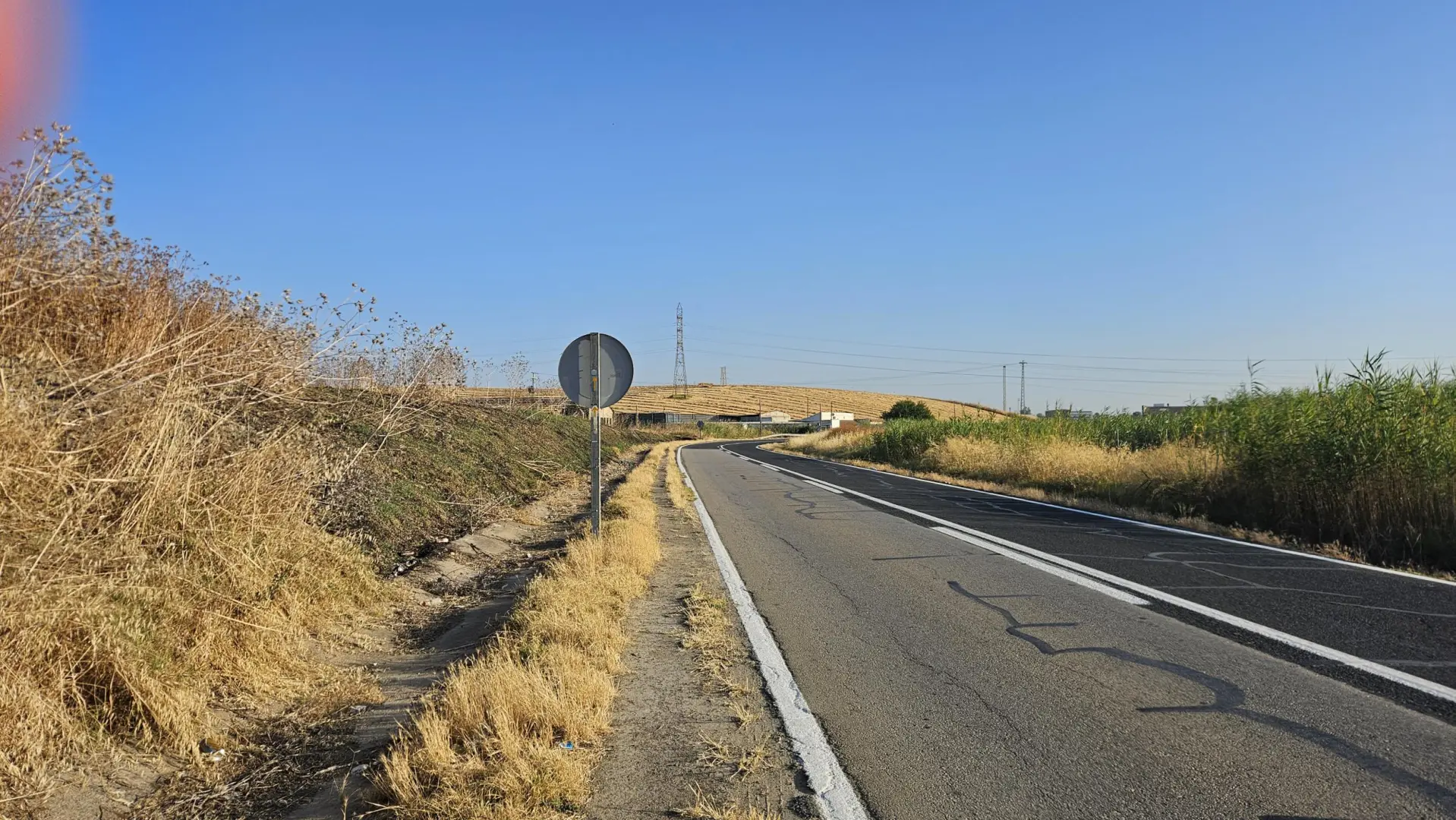
Well, almost. My destination wasn’t just around the corner. There were still five kilometres to go along a main road, no shade in sight. I walked like the fast version of a zombie—thinking I was going fast, but Google Maps strongly disagreed. I had just enough water left for one spit, and about as much energy as a deflated accordion.
I was so sweaty you could’ve wrung a litre of salty soup from my clothes. Then in the distance, I saw a bus stop—shade promised! I wanted to speed up, but the sun said: “Nope, you’re going in slow motion now, so this lesson really sticks.”
When I finally arrived, I spotted a little house with an open door to the left. I went there—water, they must have water! A woman stood in the doorway. I silently showed her my empty bottle. She smiled and led me behind the house, where a garden hose awaited. If that’s not salvation, I don’t know what is. I hugged her like she’d just rescued me from the zombie apocalypse. I instantly chugged three litres of water, plus some electrolytes for flair.
Since the little house was in the shade, I treated myself to a half-hour break. Amazing what H₂O can do to a person. If I hadn’t gotten that water, the last two kilometres would’ve been a slow-motion death scene. But thanks to it, I walked them with—almost—a smile. Almost.
When I finally arrived, I was starving like the undead. Nothing. Nothing was open, nothing smelled like food, nothing waited for me—except my exhausted body and one sad, wilted warm sandwich that had survived in my backpack since yesterday. I ate it like a champion after a gladiator fight. Completely emotionless.
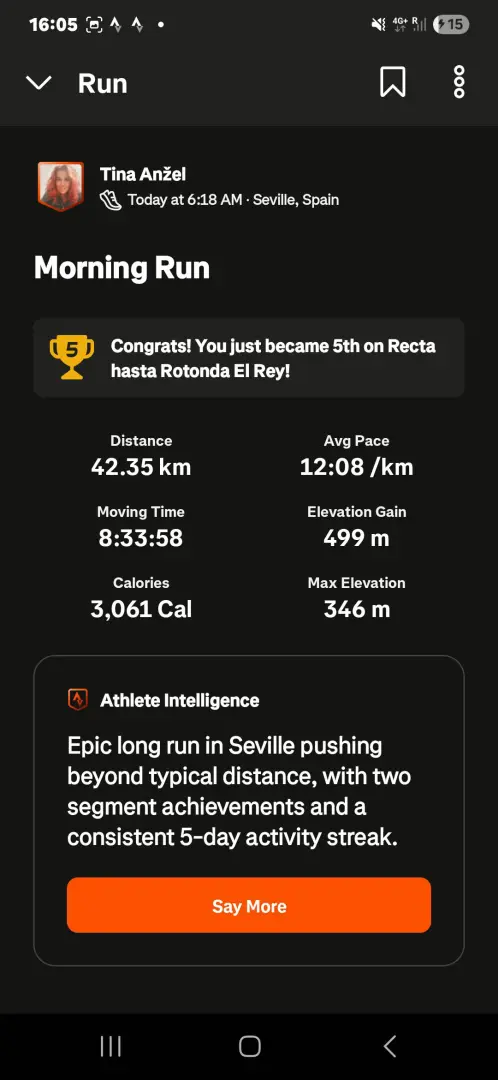
By the numbers: I walked 42.35 kilometres in one day. Yes, this isn’t a Camino, this is a marathon baked in an oven. I climbed 499 metres in elevation—just enough for my knees to remind me they still exist. I paid 17 euros for accommodation, 1.50 € for a coffee (way too little for what it saved), and 5 € for food, though with my energy burn, I clearly deserved an entire restaurant.
But hey—I’m alive, my legs are still attached, the water’s cold again, and Tina inside me is pleased. Day one was a baptism by fire. Tomorrow? We keep going. If not for motivation, then simply because I’m already too far in to turn back.
** Triglav - is the highest peak in Slovenia, also a national symbol and the centerpiece of Triglav National Park, one of the oldest national parks in Europe.